

The Great Postmaster Scandal: The worst example of systems failure
In the world of business, the recent scandal that came fully into the glare of public consciousness thanks to a TV drama, has left many of us angry, horrified, in total disbelief…
As you now know, hundreds of postmasters were sacked, fined, and even imprisoned, all due to a glaring error in the Post Office’s internal systems.
It’s a story that highlights not only the vital importance of effective systems but also the devastating consequences when they fail.
For years, postmasters had been accused of embezzlement, theft, and other financial discrepancies. Lives were ruined, families torn apart, and the trust in a respected institution eroded. But how did it all go so wrong?
At the centre of it all was a computer system known as Horizon, which was responsible for managing the financial transactions of post offices across the country. This system was supposed to be the gold standard, an infallible guardian of accuracy and trustworthiness. Unfortunately, it turned out to be anything but.
The scandal revolved around a computer error that occurred within the Horizon system. It failed to accurately account for discrepancies in post office finances, which resulted in postmasters being wrongly accused of financial mismanagement at best, and theft, at worst. Imagine balancing your chequebook, only to discover that the numbers didn’t add up, and suddenly you were branded a thief. That’s essentially what happened to these postmasters.
The first question is how such a glaring error went unnoticed for so long.
Imagine you had a previously dependable quality control system in your factory, that starts flagging hundreds of products as defective. Would you accept that all these products were defective because the computer said so and sack all of your production team for producing unusable products? No. You’d investigate and discover that the real issue is the malfunctioning inspection equipment.
One possible explanation for the ‘oversight’ lies in the blind trust (‘computer says ‘no’’) placed in technology. In our increasingly digital world, we tend to believe that computer systems are infallible. We trust them with our finances, our data, and our livelihoods. We assume that they’ll catch any discrepancies, errors, or anomalies, just like a good accountant would. But as the postmaster scandal shows, this trust can sometimes be misplaced.
The most serious flaw in this case though was the lack of human oversight or accountability.
When postmasters flagged that there were bugs in the system nobody listened to them, and the question has to be asked – who was meant to be managing the day to day operation – working with and listening to these key people at the coalface – many of whom were saying that Horizon was not fit for purpose?
Instead, when discrepancies were noticed at a senior level, the knee-jerk reaction was to lay the blame on the postmasters, with little if any effort put into analysing results, looking for the root cause of the figures. There was no system in place, or if there was, no-one followed it!
Only now, thanks to a tv drama, and in the full glare of the ensuing publicity, questions are being asked about how such a system failure could occur. Investigations are underway, and postmasters are seeking compensation for their suffering.
The lessons here are clear:
- Technology, no matter how advanced, is not infallible. It’s a tool, and like any tool, it can malfunction, and when it does, the consequences can be dire.
- Every system needs to be regularly and rigorously tested, continuously monitored, and, above all, questioned when it fails to deliver as expected.\
- We must never lose sight of the human element in our reliance on technology. At the end of the day, effective systems run your business, but (until the machines take over) you will always need good people to run your systems
- When your people on the front line raise an issue with you – listen to them!
- In the world of business, trust is our most valuable currency, and it’s a currency that we should never take for granted.
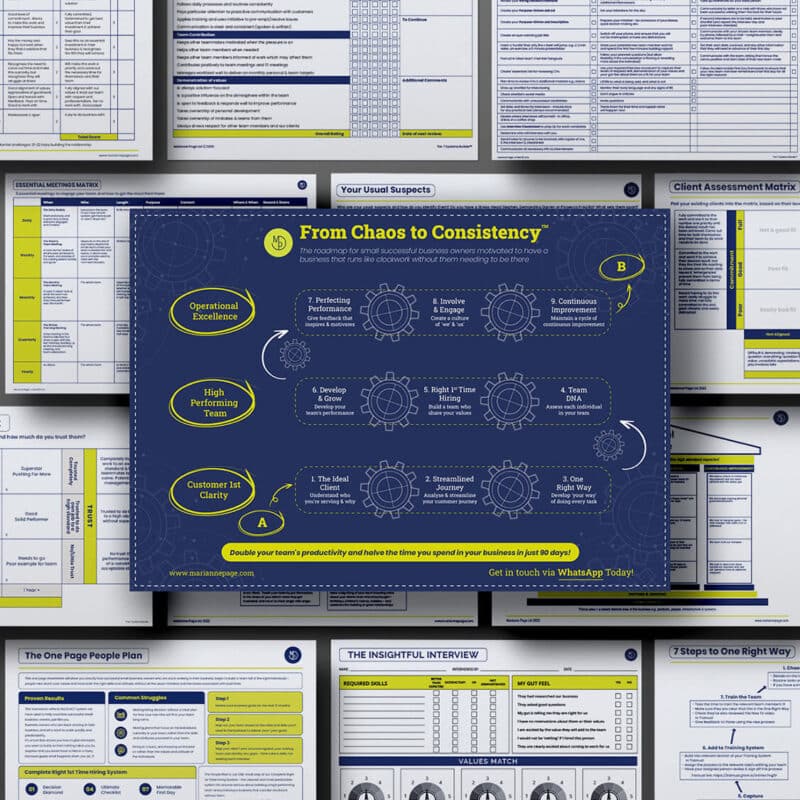
Every core system your business needs, within 90 days.
Chaos to Consistency Fast-track
Read more...


Marianne Page
Marianne is the author of three books, and is currently working on her fourth, whilst regularly writing her blog, we hope you enjoy it :-)
Categories
- Action
- Business Consistency
- Business Growth Solutions
- Business Owner
- Business Planning
- Business Relationships
- Business Systems
- Communication
- Cost Efficient Systems
- Creativity
- Customer Experience
- Customer Journey
- Customer Satisfaction
- Easy Business
- Efficiency
- Entrepreneur
- Family
- Feedback
- Get Stuff Done
- High Performing Team
- Hiring Well
- Leadership
- Management Development
- Managers' Development Programme
- Managing People
- Marianne Page
- One Right Way
- Overwhelm
- People Systems
- Performance Reviews
- Personal Development
- Personal Effectiveness
- Personal Management System
- Personal Process
- Personal Satisfaction
- Personal Systems
- Personal Transformation
- Planning For Success
- Planning System
- Process & Systems
- Scale Up
- Service Excellence
- Simple Logical Repeatable
- Success Habits
- Systems4Scale
- Team Engagement
- Time Management
- Time Management & Personal Effectiveness
- Time Off
- Training
- Uncategorized
- Vision & Values
- You Reap What You Sow
Archives
- May 2026 (1)
- April 2025 (1)
- March 2025 (2)
- February 2025 (1)
- January 2025 (1)
- December 2024 (1)
- November 2024 (2)
- October 2024 (1)
- September 2024 (1)
- July 2024 (2)
- June 2024 (2)
- May 2024 (1)
- April 2024 (2)
- March 2024 (2)
- February 2024 (1)
- January 2024 (2)
- November 2023 (2)
- October 2023 (2)
- September 2023 (2)
- August 2023 (2)
- July 2023 (2)
- June 2023 (1)
- May 2023 (2)
- April 2023 (3)
- March 2023 (3)
- February 2023 (4)
- January 2023 (2)
- December 2022 (3)
- November 2022 (1)
- October 2022 (2)
- September 2022 (1)
- August 2022 (2)
- July 2022 (1)
- June 2022 (3)
- May 2022 (1)
- April 2022 (1)
- December 2021 (1)
- August 2021 (1)
- July 2021 (1)
- June 2021 (1)
- May 2021 (1)
- April 2021 (1)
- March 2021 (3)
- February 2021 (2)
- January 2021 (3)
- December 2020 (1)
- November 2020 (1)
- October 2020 (3)
- September 2020 (4)
- August 2020 (2)
- July 2020 (3)
- June 2020 (3)
- May 2020 (5)
- April 2020 (4)
- March 2020 (3)
- February 2020 (5)
- January 2020 (2)
- November 2019 (3)
- October 2019 (2)
- September 2019 (2)
- August 2019 (5)
- July 2019 (5)
- June 2019 (2)
- May 2019 (4)
- April 2019 (4)
- March 2019 (3)
- February 2019 (4)
- January 2019 (3)
- December 2018 (2)
- November 2018 (1)
- October 2018 (4)
- September 2018 (4)
- August 2018 (3)
- July 2018 (2)
- May 2018 (1)
- March 2018 (1)
- February 2018 (1)
- November 2017 (2)
- September 2017 (1)
- August 2017 (2)
- July 2017 (2)
- June 2017 (3)
- May 2017 (3)
- March 2017 (1)
- February 2017 (2)
- January 2017 (2)
- December 2016 (3)
- November 2016 (2)
- October 2016 (2)
- September 2016 (3)
- August 2016 (5)
- July 2016 (4)
- June 2016 (3)
- May 2016 (4)
- April 2016 (4)
- March 2016 (6)
- February 2016 (4)
- January 2016 (3)
- December 2015 (3)
- November 2015 (3)
- October 2015 (5)
- September 2015 (3)
- August 2015 (4)
- July 2015 (5)
- June 2015 (3)
- May 2015 (5)
- April 2015 (4)
- March 2015 (3)
- February 2015 (3)
- January 2015 (4)
- December 2014 (3)
- November 2014 (4)
- October 2014 (4)
- September 2014 (3)
- August 2014 (5)
- July 2014 (4)
- June 2014 (3)
- May 2014 (4)
- April 2014 (3)
- March 2014 (4)
- February 2014 (4)
- January 2014 (5)
- December 2013 (3)
- November 2013 (5)
- October 2013 (4)
- September 2013 (5)
- August 2013 (4)
- July 2013 (2)
- June 2013 (5)
- May 2013 (5)
- April 2013 (2)
- March 2013 (5)
- February 2013 (4)
- January 2013 (2)
- August 2012 (1)
- July 2012 (3)
- June 2012 (3)
- May 2012 (1)
- April 2012 (1)
- March 2012 (2)
- February 2012 (1)
Have Any Question?
If you are looking for more information about our services, would like to give your feedback, or simply like to make contact we’d love to hear from you.